
Why dogs follow you everywhere
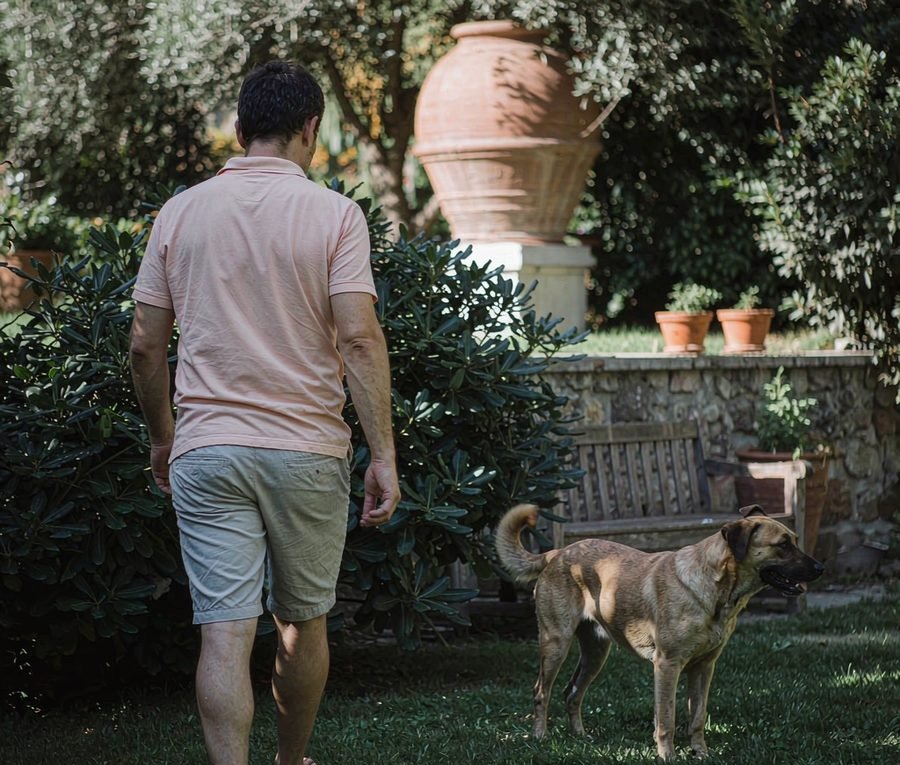
Every dog owner knows the shadow. You stand up, the dog stands up. You go to the kitchen, the dog is in the kitchen. You close the bathroom door and a nose appears under it like a periscope.
People joke that their dog has no concept of privacy. The truth is sweeter than that.
You are the pack
Dogs are descended from animals that survived by staying together. Separation from the group once meant danger, so the instinct to keep the group in sight runs deep. In your house, the group is you.
Following you is not neediness in the human sense. It is your dog doing the oldest job it has: keeping the pack together and keeping an eye on its favorite member.
There is also the boring answer, which is that good things happen where you are. Food appears, doors open, walks begin. From your dog's point of view, you are the source of all major events. Of course they track you.
When following is worth a closer look
Most of the time this is harmless and even endearing. But if the following is sudden, or comes with whining at any distance, pacing, or a dog that cannot settle in a room alone, it can tip into real separation anxiety.
The fix is not to push the dog away. It is to make alone time boring-but-safe: a stuffed toy in another room, short separations that always end well, and no big farewells at the door.
Our office dog, a beagle named Bao, follows the production manager on her entire morning rounds. When we test a new leash or harness sample, Bao's willingness to trot off happily at the end of it tells us more than any spec sheet. A dog that feels secure walks loose. A dog that does not, checks back every few steps.
So next time the bathroom door will not shut properly because of a snout, take it as the compliment it is.