
Two cats or one? What we learned the hard way
The plan was simple. Our cat Nana worked long days alone at home with us, so we would get her a friend. Companion, entertainment, problem solved. We brought home a bouncy six-month-old and put him on the living room floor.
Nana looked at us like we had betrayed a treaty. Then she went under the bed for a month.
Cats are not dogs about company
A dog hears second dog and thinks pack. A cat hears second cat and thinks competitor, at least at first. Cats are territorial by default. In their natural life, the cats they accept are family, and family is chosen slowly, on their terms.
So the honest answer to two cats or one is: it depends on the cats, not on the arithmetic of your guilt.
When a second cat works well
Kittens raised together usually bond for life. Two adults introduced slowly can become genuine companions, especially if they are both youngish and laid back. The pairing that goes best is a confident resident cat with a calm newcomer of similar energy.
The introduction nobody should skip
Separate rooms for the first days. Swap scents before faces: trade blankets, feed on opposite sides of a closed door. Then short, supervised meetings, ending on purpose before anything goes wrong. Weeks, not days. Rushing the introduction is the single most common mistake, and it is the one we made.
Resource math matters too. The rule is one litter box per cat plus one, and food and water stations in separate spots. Most cat conflict is really resource conflict wearing a fur coat.
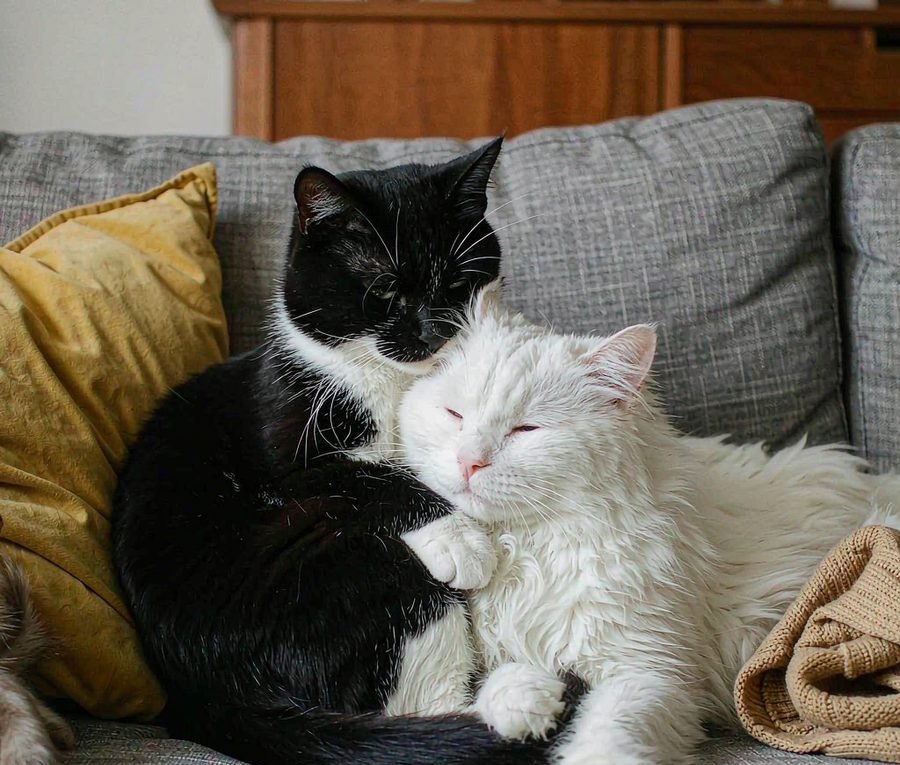
Six months on, Nana and the kitten are not cuddly friends. They are colleagues. They share the sunny window in shifts, they play chase at 11pm, and Nana grooms his ears when she thinks nobody is watching. Would she have chosen this? Hard to say. Is the household better? Yes.
If you do it, do it slowly. If you decide against it, add a window perch and daily play instead. Cats are flexible about how their social needs get met. People are the ones who like tidy answers.