
A dog's senior years: what changes and what doesn't
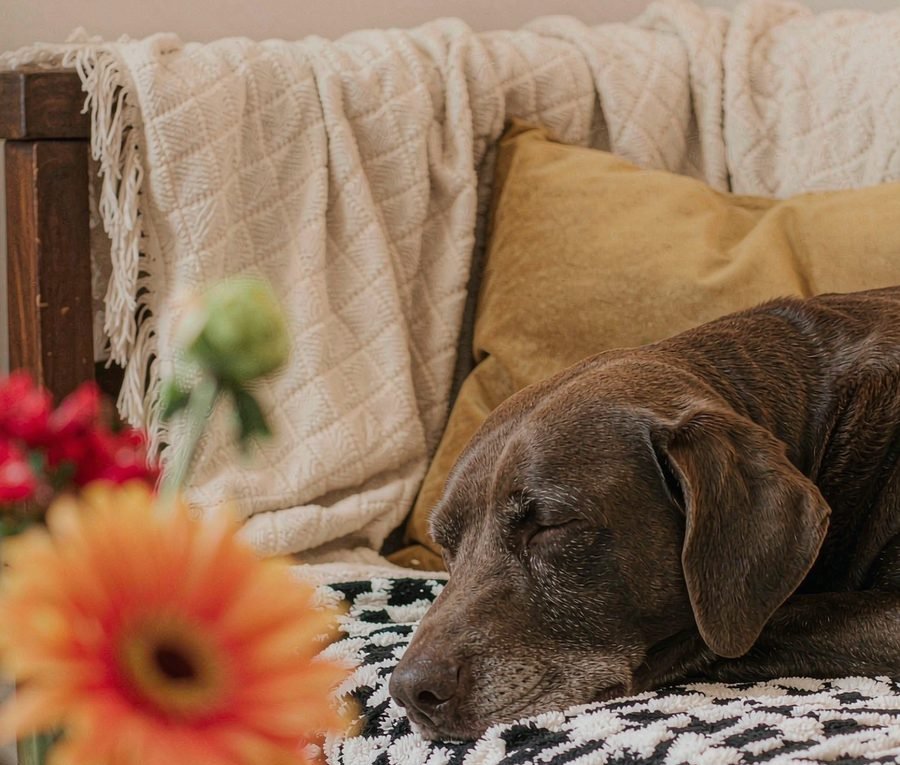
Nobody warns you that the first sign of your dog aging is usually the muzzle going gray, and that it shows up around year seven, right about when you finally feel like you have this dog thing figured out.
Aging is not a diagnosis. It is a set of slow changes, and almost all of them can be made easier.
What changes
Joints first, usually. The dog that launched off the sofa starts taking the dismount in stages. Stiffness after long naps, slower on stairs, hesitating at the car. Arthritis is nearly universal in senior dogs and very treatable, so mention it early rather than accepting it as normal.
Sleep deepens and stretches. Senses dim gradually; many older dogs lose some hearing, and night vision fades. House rules may need small edits: lights left on in the hallway, mats on slippery floors, water bowls duplicated in more rooms.
Weight creeps up as metabolism slows, and it matters more now than ever, because extra kilograms ride directly on those aging joints.
What does not change
The need for a job and a routine. Senior dogs still want the walk, even if it is the short loop at smell-pace. They still want to be included. What we call spoiling, longer sniff breaks, the good spot on the couch, is actually just correct scheduling for the stage they are in.
The love, obviously, does not change. If anything it gets quieter and more direct. A young dog loves you with its whole body. An old dog loves you with its eyes, from the bed, while you make coffee.
Small upgrades that earn their cost
An orthopedic bed is the one purchase that changes daily life most; good foam keeps pressure off hips that now complain at dawn. Ramps for the car and the sofa prevent the jumps that cost them later. Raised bowls help some dogs with stiff necks. Twice-yearly vet visits instead of one, because senior things move faster.
We redesigned our whole bed line around this stage a few years back, after watching our own dog struggle to stand from a bed with tall sides. The new ones have a lower entry, real support foam, and a washable cover, because senior dogs and senior bladders are a package deal.
The senior years are not the sad epilogue people expect. Done thoughtfully, they are the years when the relationship is most settled, most wordless, and most mutually understood. Slower walks. Same dog. More gratitude per step.