
The case for the boring leash
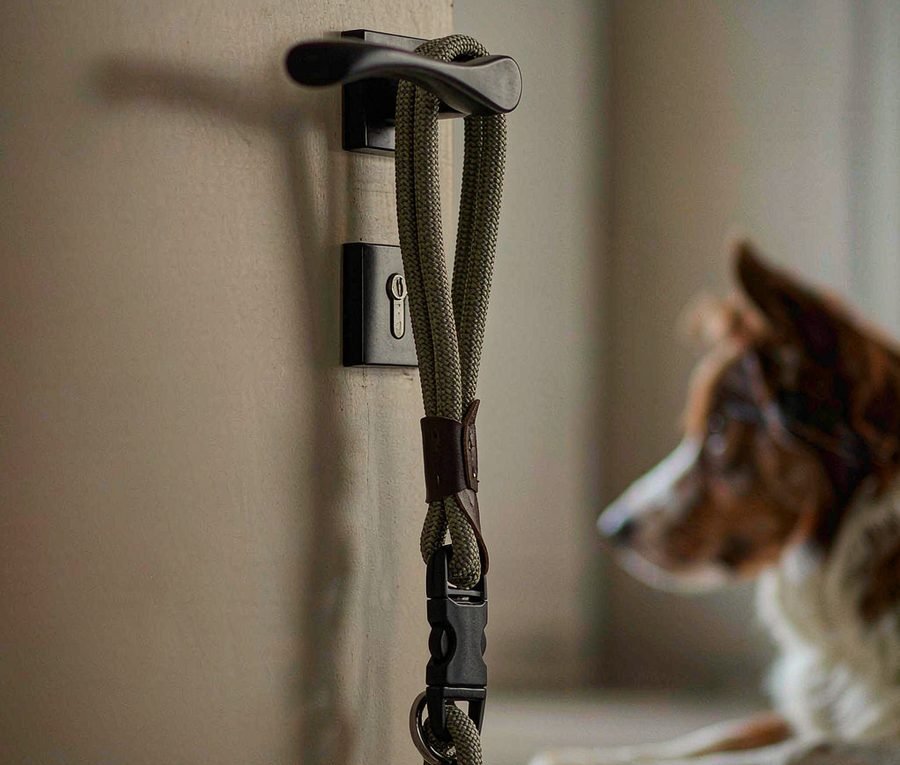
Every year the pet market invents a new leash. Retractable ones, bungee ones, leashes with lights, with bottle openers, with more hardware than a sailboat. I have tested most of them, and I am here to defend the boring one: a flat nylon or leather leash, about a meter and a half, one clip, one loop.
What the plain leash does better
Communication. Training lives in the slack. With a fixed-length leash, your dog learns where you are without checking, because the leash goes tight at the same distance every time. That consistency is why trainers reach for it first.
A retractable leash teaches the opposite. The length always changes, so there is nothing to learn, and the constant light tension actually trains dogs to pull. The lock button fails eventually, usually at the worst moment, and the thin cord is a hand-injury specialty.
Safety in the details nobody photographs
The clip is the part that matters. A cheap snap that rusts or sticks is the failure point of the whole system. A solid swivel snap, checked now and then for wear, is unglamorous and essential. The stitching near the loop takes the most stress of any part; if you see fraying there, retire the leash the way you would retire a worn tire.
Width matters less than people think. A wider leash is not automatically stronger; a good 20-millimeter nylon with tight weave will outlive a fat, floppy one. For small dogs, lighter hardware is kinder to the neck than thick leather.
Reflective stitching is the one upgrade I would never skip for city dogs, because it costs nothing on the walk and can matter enormously on the one dark evening something goes wrong.
When we designed our standard leash at Poteho, we argued about adding features for weeks and ended up cutting all of them. What stayed: tight-weave webbing, bar-tack stitching at every stress point, a tested swivel snap, and a reflective line stitched flat so it cannot rub off. It is a boring leash on purpose. Boring, in this category, is what reliability looks like.